
Dr. Abhishek Saxena
Published on February 17, 2026
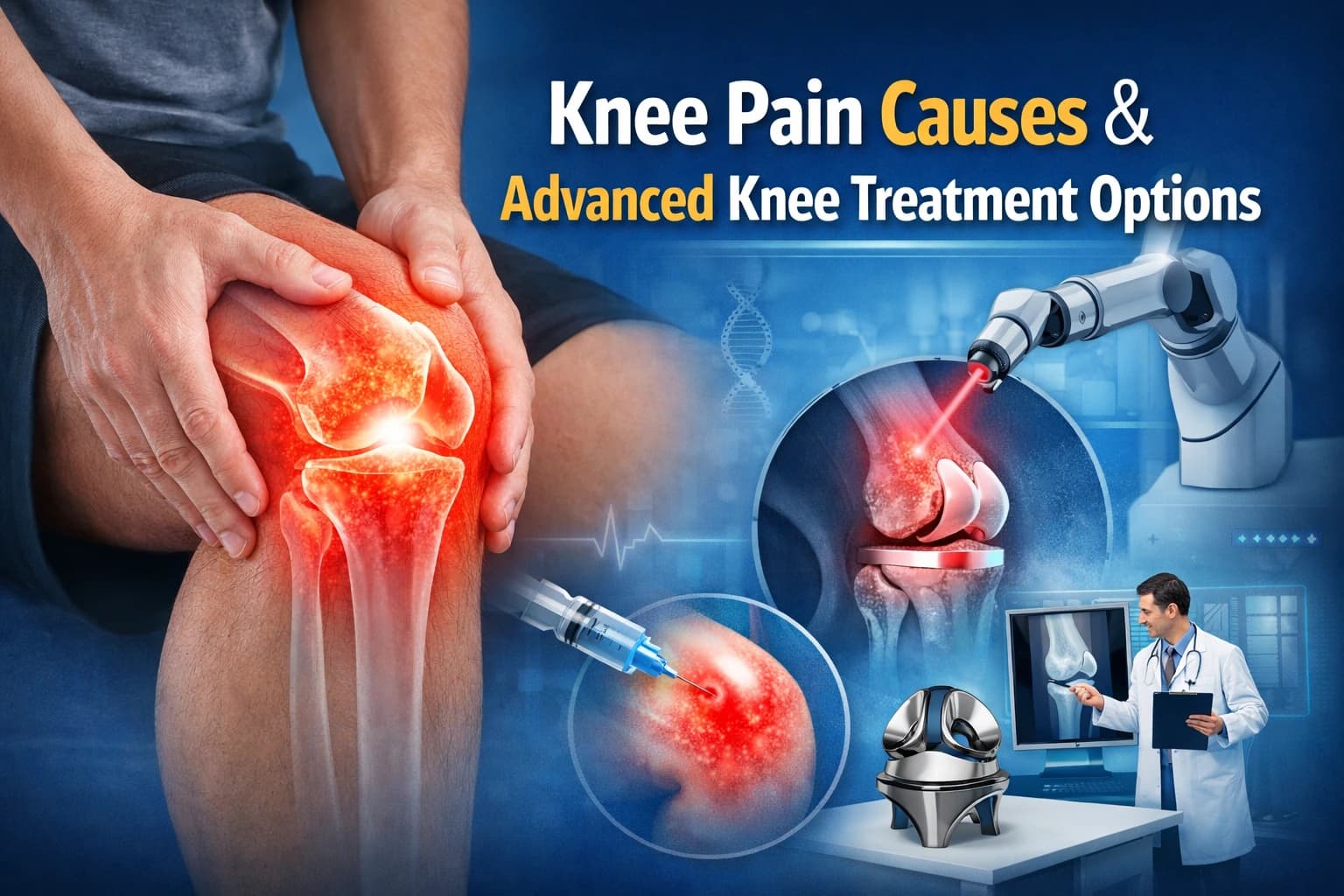
Knee Pain Causes & Advanced Knee Treatment Options
Knee pain is one of the most common joint problems affecting people of all age groups. Whether you are a young athlete, a working professional, or a senior citizen, knee discomfort can disturb your daily routine and reduce mobility. From mild stiffness to severe pain that makes walking difficult, knee issues should never be ignored. Early diagnosis and the right treatment can prevent long-term damage and help you regain an active lifestyle.
In this blog, we will understand the major causes of knee pain and explore advanced knee pain treatments in Ajmer that offer effective and long-lasting relief.
Common Causes of Knee Pain
Knee pain can occur due to various reasons. Some are temporary and manageable with rest, while others may require medical intervention.
1. Osteoarthritis
Osteoarthritis is one of the leading causes of knee pain, especially in people above 45 years of age. It occurs when the cartilage cushioning the knee joint gradually wears away. This leads to pain, swelling, stiffness, and difficulty in movement. Morning stiffness and pain while climbing stairs are common symptoms.
2. Ligament Injuries
Sports activities, sudden twisting movements, or accidents can cause ligament injuries such as ACL or PCL tears. These injuries often result in swelling, instability, and sharp pain in the knee.
3. Meniscus Tear
The meniscus is a cartilage structure that acts as a shock absorber between the thigh and shin bones. A sudden twist or heavy lifting can tear the meniscus, leading to pain, swelling, and restricted motion.
4. Tendinitis
Overuse of the knee joint—especially in runners or athletes—can cause inflammation of the tendons. This condition is known as tendinitis and results in pain during movement.
5. Rheumatoid Arthritis
Unlike osteoarthritis, rheumatoid arthritis is an autoimmune condition where the body’s immune system attacks the joints. It can cause swelling, redness, stiffness, and chronic knee pain.
6. Obesity and Lifestyle Factors
Excess body weight puts additional pressure on the knee joints. Poor posture, lack of exercise, and prolonged sitting can also contribute to joint pain and stiffness.
Symptoms You Should Not Ignore
- Persistent knee pain lasting more than a few days
- Swelling or redness around the knee
- Difficulty bending or straightening the leg
- Locking or clicking sound in the knee
- Instability while walking
If you experience these symptoms, it is important to consult a specialist for proper evaluation and Joints Pain treatments in Ajmer before the condition worsens.
Diagnosis of Knee Pain
A proper diagnosis is essential for effective treatment. Doctors usually recommend:
- Physical examination
- X-ray to check bone damage
- MRI for soft tissue injuries
- Blood tests (in case of suspected rheumatoid arthritis)
Early detection helps in planning the most suitable knee pain treatments in Ajmer based on the severity of the condition.
Advanced Knee Treatment Options
Medical science has advanced significantly, offering multiple modern and minimally invasive options for knee pain relief.
1. Medications and Lifestyle Modification
For mild to moderate knee pain, doctors may prescribe anti-inflammatory medicines and pain relievers. Weight management, a balanced diet, and regular low-impact exercises like walking or swimming can significantly improve joint health.
2. Physiotherapy
Physiotherapy plays a crucial role in strengthening the muscles around the knee. Targeted exercises improve flexibility, stability, and reduce stress on the joint. Many patients benefit greatly from structured rehabilitation programs as part of Joints Pain treatments in Ajmer.
3. PRP Therapy (Platelet-Rich Plasma)
PRP therapy is an advanced regenerative treatment where a small amount of the patient’s blood is processed to extract growth factors and injected into the affected knee. This promotes natural healing and reduces inflammation.
4. Hyaluronic Acid Injections
These injections help lubricate the knee joint, improving movement and reducing pain in osteoarthritis patients.
5. Arthroscopic Surgery
Arthroscopy is a minimally invasive surgical procedure where a small camera is inserted into the knee joint. It is used to repair ligament tears, remove damaged cartilage, or treat meniscus injuries. Recovery time is shorter compared to traditional surgery.
6. Knee Replacement Surgery
In severe cases where cartilage damage is extensive, knee replacement surgery may be recommended. During this procedure, the damaged joint surfaces are replaced with artificial implants. Modern knee replacement techniques ensure faster recovery and improved mobility.
Many hospitals now offer advanced knee pain treatments in Ajmer with state-of-the-art technology and experienced orthopedic specialists.
Preventing Knee Pain
Prevention is always better than cure. Here are some tips to maintain healthy knees:
- Maintain a healthy body weight
- Exercise regularly to strengthen leg muscles
- Avoid sudden twisting movements
- Wear proper footwear
- Stretch before and after physical activities
- Avoid sitting in one position for too long
Adopting these healthy habits can reduce the risk of chronic knee issues and improve joint flexibility.
When to See a Specialist?
If knee pain interferes with your daily activities, worsens over time, or does not improve with rest and home remedies, consult an orthopedic specialist immediately. Early intervention can prevent permanent joint damage and reduce the need for surgery.
With advanced Joints Pain treatments in Ajmer, patients now have access to modern therapies that focus on long-term relief and improved quality of life.
Conclusion
Knee pain is a common yet manageable condition when treated at the right time. Understanding its causes and symptoms is the first step toward recovery. From physiotherapy and regenerative therapies to minimally invasive surgery and knee replacement, several advanced knee pain treatments in Ajmer are available to help patients regain mobility and live pain-free lives.
If you or your loved ones are struggling with knee discomfort, do not ignore the symptoms. Seek expert advice and choose the most suitable treatment option for lasting relief and better joint health.
