
Dr. Abhishek Saxena
Published on February 21, 2026
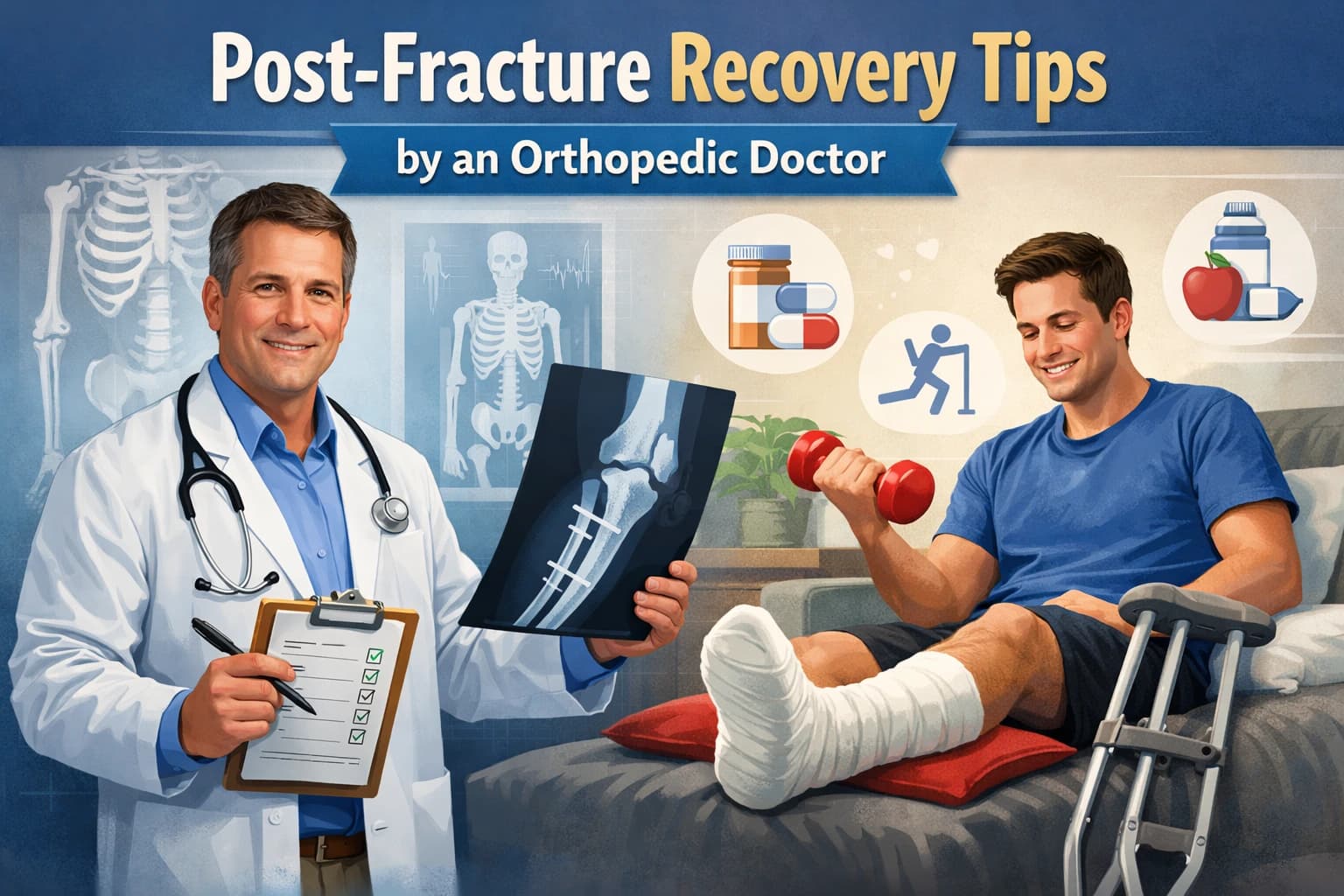
Expert Guide to Post-Fracture Recovery: Tips from an Orthopedic Doctor
Recovering from a fracture is not just about waiting for the bone to heal—it’s about restoring strength, mobility, and confidence. A fracture can disrupt daily life, limit movement, and cause significant discomfort. However, with proper medical guidance and rehabilitation, you can return to normal activities safely and effectively.
According to Dr. Abhishek Saxena, timely treatment, proper nutrition, and structured physiotherapy play a vital role in complete recovery. Here is an expert guide to help you understand the post-fracture recovery process and what you can do to heal faster and stronger.
1. Understanding the Healing Process
🔹 Inflammatory Phase (First Few Days)
Immediately after a fracture, the body forms a blood clot around the broken bone. Swelling and pain are common during this phase.
🔹 Reparative Phase (2–6 Weeks)
The body starts forming a soft callus around the fracture site, which gradually hardens into new bone.
🔹 Remodeling Phase (Several Months)
The newly formed bone reshapes itself and regains strength. Proper care during this phase ensures complete healing.
Understanding these stages helps patients remain patient and follow medical advice carefully.
2. Follow Medical Instructions Strictly
After a fracture, your orthopedic doctor may recommend:
- Plaster cast or splint
- Surgery with plates or screws (if required)
- Limited weight-bearing
- Specific medications
Ignoring these instructions can delay healing or cause complications. Regular follow-ups are essential to monitor bone alignment and healing progress through X-rays.
3. Nutrition: Fuel for Faster Recovery
Your body needs extra nutrients to repair bone tissue. Include these in your diet:
🥛 Calcium-Rich Foods
Milk, curd, paneer, almonds, sesame seeds
☀️ Vitamin D
Sunlight exposure (15–20 minutes daily), fortified foods
🥚 Protein
Eggs, lentils, chicken, soybeans
🥦 Vitamin C
Citrus fruits, amla, capsicum
Avoid smoking and excessive alcohol, as they can slow bone healing.
4. Start Physiotherapy at the Right Time
Many patients fear movement after a fracture. However, guided physiotherapy helps:
- Prevent stiffness
- Improve blood circulation
- Restore muscle strength
- Regain joint mobility
Your doctor will suggest safe exercises depending on the fracture type and healing stage. Never start exercises without medical approval.
5. Manage Pain and Swelling
Pain and swelling are common in early recovery. To manage them:
- Elevate the injured limb
- Apply ice packs (if advised)
- Take prescribed pain medications
- Avoid putting pressure on the affected area
If pain increases suddenly, consult your doctor immediately.
6. Gradual Return to Daily Activities
Healing does not mean immediate return to heavy work. Gradually increase activity levels.
- ✔ Start with light movements
- ✔ Avoid lifting heavy objects
- ✔ Use support devices (walker, crutches) if advised
- ✔ Follow workplace or sports restrictions
Returning too early can cause re-injury or improper bone alignment.
7. Watch for Warning Signs
Contact your orthopedic doctor if you notice:
- Persistent severe pain
- Excessive swelling
- Fever
- Numbness or tingling
- Cast becoming too tight
Early intervention prevents serious complications.
8. Mental Health Matters
Fracture recovery can be emotionally challenging. Limited mobility may cause frustration or stress. Stay positive by:
- Setting small recovery goals
- Staying connected with family and friends
- Practicing relaxation techniques
A positive mindset significantly improves healing outcomes.
9. Recovery Timeline (General Overview)
- Minor fractures: 4–6 weeks
- Moderate fractures: 6–8 weeks
- Major or surgical fractures: 3–6 months
Recovery time varies depending on age, bone type, overall health, and injury severity.
Why Choose Expert Orthopedic Care in Ajmer?
Proper post-fracture management requires experience and personalized attention. Dr. Abhishek Saxena provides comprehensive orthopedic care, including fracture management, post-surgical rehabilitation guidance, and advanced treatment options to ensure faster and safer recovery.
With a patient-focused approach, the goal is not just bone healing—but complete functional recovery.
Final Thoughts
Post-fracture recovery is a journey that requires patience, discipline, and expert supervision. Following medical advice, maintaining proper nutrition, and engaging in structured rehabilitation can significantly speed up healing and restore full mobility.
If you or your loved one is recovering from a fracture, don’t delay professional consultation. Early and proper care makes all the difference.
